
Tankless water heaters are becoming a popular choice in Forest Hills & Queens homes due to their energy efficiency and ability to provide hot water on demand. Unlike traditional systems, these units heat water only when needed, making them ideal for households looking for consistent performance and reduced energy usage.
Forest Hills Water Heater Repair & Replacement installs tankless water heaters throughout Forest Hills and Queens, NY. Water heaters are all we do. Every installation is sized for your home's actual demand, fully permitted under NYC code, and completed in a single visit — with a written price you approve before we touch anything.
A conventional tank stores 40 to 50 gallons of water and keeps it hot around the clock — whether you're home or not, whether you're using hot water or not. When that stored supply runs out, you wait. And you pay for that standby energy 24 hours a day, 365 days a year.
A tankless unit heats water the moment you turn on a tap and stops the instant you turn it off. No storage tank. No standby waste. No running out mid-shower when a second person turns on another fixture.
The practical difference in a household:
We confirm tax credit eligibility for the specific unit we recommend before you commit to anything.
Your current tank is at or near end of life and you're already facing a replacement. The cost difference between a new conventional tank and upgrading to tankless shrinks considerably when you're spending money on a new unit either way — and the tankless unit will outlast a replacement tank by nearly a decade.
Multiple people in your household compete for hot water. Back-to-back showers, a dishwasher running while someone bathes, laundry and a shower simultaneously — none of it depletes a tankless system. The supply is continuous.
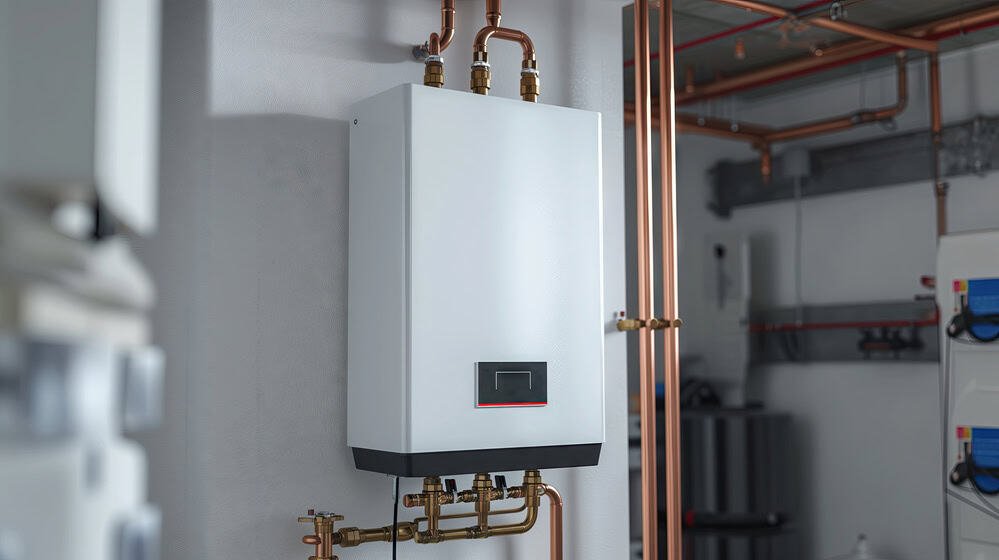
Space is limited. A tankless unit mounts directly to a wall and occupies roughly 75% less space than a conventional tank. In apartments, co-ops, and homes across Forest Hills and Queens where utility closets are tight, this matters.
You want to reduce what you spend on energy month over month. Eliminating standby heating — the energy a tank burns keeping stored water hot when nobody is using it — is where most of the annual savings come from.
Your priority is the lowest possible upfront cost. Your existing gas line and venting are already configured for a tank and a tankless upgrade would require significant infrastructure work. We tell you this clearly, with real numbers, before you make any decision. You can visit our tank water heater installation page for more details.
Tankless done wrong costs more than it saves. Here is where it goes wrong most often.
Undersized gas line. Tankless units draw up to 200,000 BTU at peak — three to four times a conventional tank. Many older Queens buildings were never plumbed for that load. We assess your gas line before quoting. If upsizing is needed, it is in your flat-rate price from the start.
Incorrect venting. Wrong venting materials or configuration cause safety shutoffs, carbon monoxide risk, and voided warranties. We design the venting before we quote the job, not after we've opened the wall.
Wrong sizing for winter. Incoming water in Queens hits 40–45°F in January. A unit sized for warmer months underperforms all winter. We size for worst-case cold weather — not seasonal averages.
No NYC permit. Every installation requires a DOB permit and inspection. Unpermitted work voids your warranty and creates problems when you sell or refinance. We handle the permit, inspection, and sign-off — included in your price.
Co-op documentation. Most Forest Hills and Queens co-op boards require contractor credentials and insurance before work begins. We arrive with everything prepared and coordinate directly with managing agents.
We are not a dealer for any brand. We recommend based on your home's configuration, your household's demand, and what will perform correctly for the life of the system. The brands we install most frequently across Queens:
Navien — Compact design, built-in recirculation pump option, and PVC venting compatibility make the NPE series a strong fit for apartments and co-ops with limited mechanical room space.
Rinnai — Dependable, strong warranty support, excellent parts availability across Queens. The RU and RL series cover a wide range of household sizes and are well-suited to row homes and multi-family properties.
Rheem — The Performance Platinum condensing series offers excellent efficiency and qualifies for the 2026 federal tax credit. Parts are readily available throughout Queens, which matters for long-term serviceability.
Noritz — Highly regarded for reliability under high simultaneous demand. Common in multi-unit residential buildings and commercial properties.
Bosch — The Therm series is a strong option where even a standard tankless footprint is constrained. Compact, efficient, and well-suited to smaller apartments.
| Tankless | Conventional Tank | |
|---|---|---|
| Lifespan | 18–20 years | 8–12 years |
| Hot water supply | Unlimited | Limited to tank capacity |
| Energy use | On-demand only | 24/7 standby heating |
| Annual energy savings | 30–40% lower | Baseline |
| Space required | Wall-mounted, minimal | 40–60 gallon floor unit |
| Upfront cost | Higher | Lower |
| Federal tax credit (2026) | Up to $2,000 | Not eligible |
| NYC permit required | Yes | Yes |
Over a 20-year window, factoring in the second tank replacement a conventional unit requires, the total cost of ownership typically favors tankless by a significant margin — especially with the tax credit applied in year one.
Tankless systems are becoming more common in Forest Hills and all of Queens, especially in homes looking for energy-efficient solutions. These systems require a different installation approach compared to traditional tanks.
We tailor each installation based on your home’s layout and water usage.
Experience with modern tankless systems
Proper sizing based on household demand
Clean and efficient installation process
Focus on long-term system performance
You can explore service locations here:
Installation typically takes a few hours but may vary depending on system complexity and setup.
Tankless systems offer continuous hot water and improved efficiency, but the right choice depends on your needs.
Yes, they heat water only when needed, which can improve energy efficiency.
Yes, many homeowners upgrade from tank to tankless systems during installation.
The size depends on your household’s water usage and required flow rate.
They require periodic maintenance, especially in areas with mineral-rich water.
Yes, if properly sized, they can handle high demand.
Yes, we install both types based on your home’s setup.
If you are planning to upgrade to a tankless system, proper installation is key to getting the best performance and efficiency.
We are here to help you install a reliable system that provides consistent hot water for your home.
Contact us today to schedule your installation.