
Middle Village runs on basement water heaters. Most homes here — the attached brick rowhouses off Juniper Valley Road, the semi-detached two-families near Metropolitan and Woodhaven Avenue, the smaller apartment buildings tucked between them — were built between the 1940s and 1960s, and almost all of them still heat water the same way: a tank unit sitting in the basement, feeding a house that's been added onto, renovated, and re-piped more than once since it was built.
We're a Forest Hills-based water heater specialist, and Middle Village is one of the neighborhoods we run calls in every week. A licensed NYC plumber reaches you in one to three hours, gives you a flat-rate price before any work starts, and there's no extra charge for nights, weekends, or holidays.
Middle Village's housing stock creates a specific failure pattern, and it's not the same one we see in Forest Hills' co-ops or Rego Park's high-rises.
Most homes here still run original or near-original cast iron and galvanized supply lines from the 1950s. As those pipes corrode internally, sediment and mineral particles wash straight into the water heater tank — which means Middle Village units tend to build up sediment faster than a newer-piped home would, even at the same water hardness level. That sediment layer is what causes the two complaints we hear most from this neighborhood: rumbling or popping noises from the tank, and a noticeable drop in hot water capacity over a year or two, even though the unit is "supposed to" hold 40 or 50 gallons.
The other pattern is space. Basements in these rowhouses and semi-detached homes are often finished, converted, or shared with a boiler, laundry setup, and storage — meaning a straightforward tank swap sometimes isn't straightforward once we're actually down there. We plan for that before we quote the job, not after we've started.
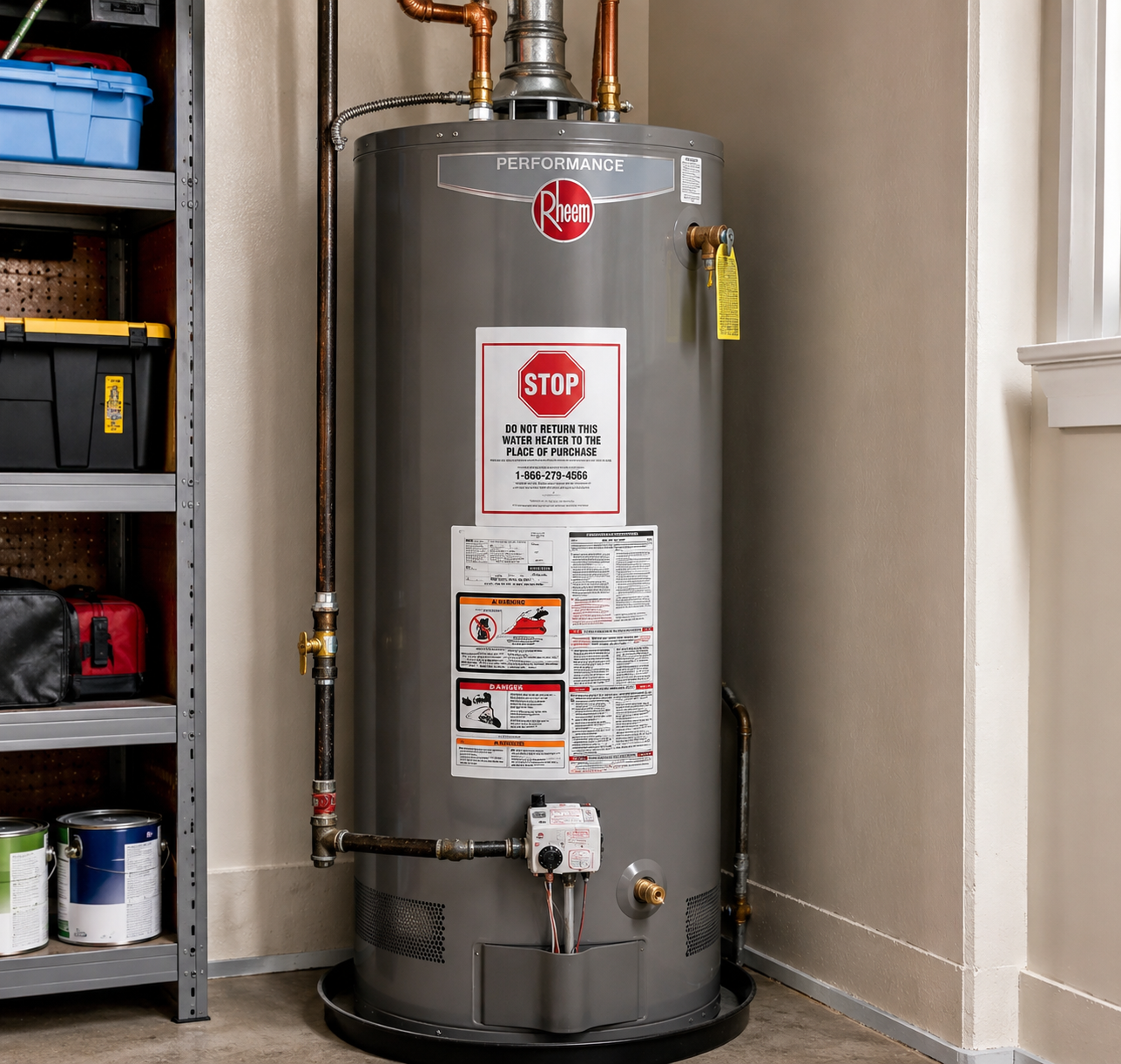
Because most Middle Village properties are single-family or two-family homes with their own dedicated unit — not a building-wide system shared across dozens of apartments — installation here usually comes down to one real decision: stay with a tank, or switch to tankless.
Tank replacement is the straightforward call for most rowhouses and semi-detached homes with existing gas or electric hookups already in place. We size the new unit to your household, not just a like-for-like swap of what's already there.
Tankless conversion comes up often in Middle Village specifically because these basements are finished or tight on space more often than not — a wall-mounted tankless unit gets a 40-50 gallon tank out of the room entirely. It also means you're not paying to keep a tank of water hot 24 hours a day for a household that only needs hot water a few hours of it.
Every installation includes a written price before we start, the correct gas line or electrical assessment for your specific home, and — where required — the permit filed with the city.
Most water heater problems don't require a new unit — they require someone who can actually diagnose what's failing.
No hot water, or it runs out fast. Usually, a failed heating element (electric) or a bad thermocouple/gas valve (gas). Both are same-visit repairs in most cases.
Rumbling, popping, or banging from the tank. Sediment buildup hardening on the bottom of the tank — common in Middle Village given the older supply lines feeding these homes. A flush resolves it if caught early; ignored long enough, it accelerates tank failure.
Water pooling around the base of the unit. Could be a loose-fitting, a failing pressure relief valve, or a cracked tank. We check the fitting and valve first — both are cheap fixes — before ever telling you the tank itself is gone.
Pilot light won't stay lit, or the unit won't ignite. Thermocouple failure, a dirty pilot orifice, or a draft issue are the usual causes on older gas units common in this neighborhood.
Rusty or discolored hot water. Usually, the anode rod has fully corroded, and the tank itself has started rusting from the inside — a sign the unit is near end of life, though not always an immediate emergency.
A leaking tank in a finished basement is a different emergency than a leaking tank in an unfinished one — water finds flooring, drywall, and stored belongings fast. If your water heater is actively leaking, making a hissing sound, or has gone completely cold with no hot water anywhere in the house, that's an emergency call, not a schedule-it-for-next-week call. We answer 24/7, and a licensed plumber is at your door in one to three hours — no after-hours surcharge for nights, weekends, or holidays.
Middle Village's older housing mixes both fuel types depending on when a given home was last renovated — we carry parts and diagnostic equipment for both on every truck.
Gas water heaters — thermocouple failure, dirty burner assemblies, and venting issues are the most common calls, particularly in homes where the unit hasn't had annual service.
Electric water heaters — failed upper or lower heating elements, tripped high-limit switches, and corroded electrical connections are what we see most often.
We only do water heaters. Not a general plumber who also handles water heaters between other jobs — this is the entire business, which means faster, more accurate diagnosis.
One to three hour response, every day, all year.
A written, flat-rate price before we touch anything. No hourly surprises.
Every major brand. A.O. Smith, Rheem, Navien, Rinnai, Bosch, Noritz, State, and Bradford White — tank and tankless, gas and electric.
No pressure toward replacement. If a repair is the right call for your unit, that's what we recommend — and tell you why.
Our goal is to fix the issue properly so you don’t have to deal with repeat problems.
Yes — Middle Village is one of our regular service areas. Most repairs are diagnosed and completed the same visit.
Typically one to three hours from your call, including nights, weekends, and holidays, with no extra charge for after-hours service.
It can. Finished basements sometimes mean less clearance around the unit or additional protection needed during a tank replacement. We assess this on the visit and price it into the written quote before starting — not after.
If the tank itself hasn't started leaking or rusting through, repair is usually the better value — especially for a unit under 8-10 years old. Once the tank is compromised, replacement is the only real option. We'll tell you which situation you're in honestly.
Yes, and it's a common request here specifically because basements in this neighborhood are often finished or space-constrained. A tankless unit mounts on the wall and eliminates the tank footprint entirely.
Sediment buildup on the bottom of the tank, accelerated by the original cast iron and galvanized supply lines common in homes built in this neighborhood's 1940s-60s construction era. A flush can resolve it if the tank hasn't been damaged yet.
Yes — we also serve Elmhurst, Ridgewood, Glendale, Rego Park, Forest Hills, and the rest of Queens.
If your water heater is out, leaking, or just not keeping up anymore, get a licensed plumber to your Middle Village home the same day — with a written price before we start and no after-hours markup.