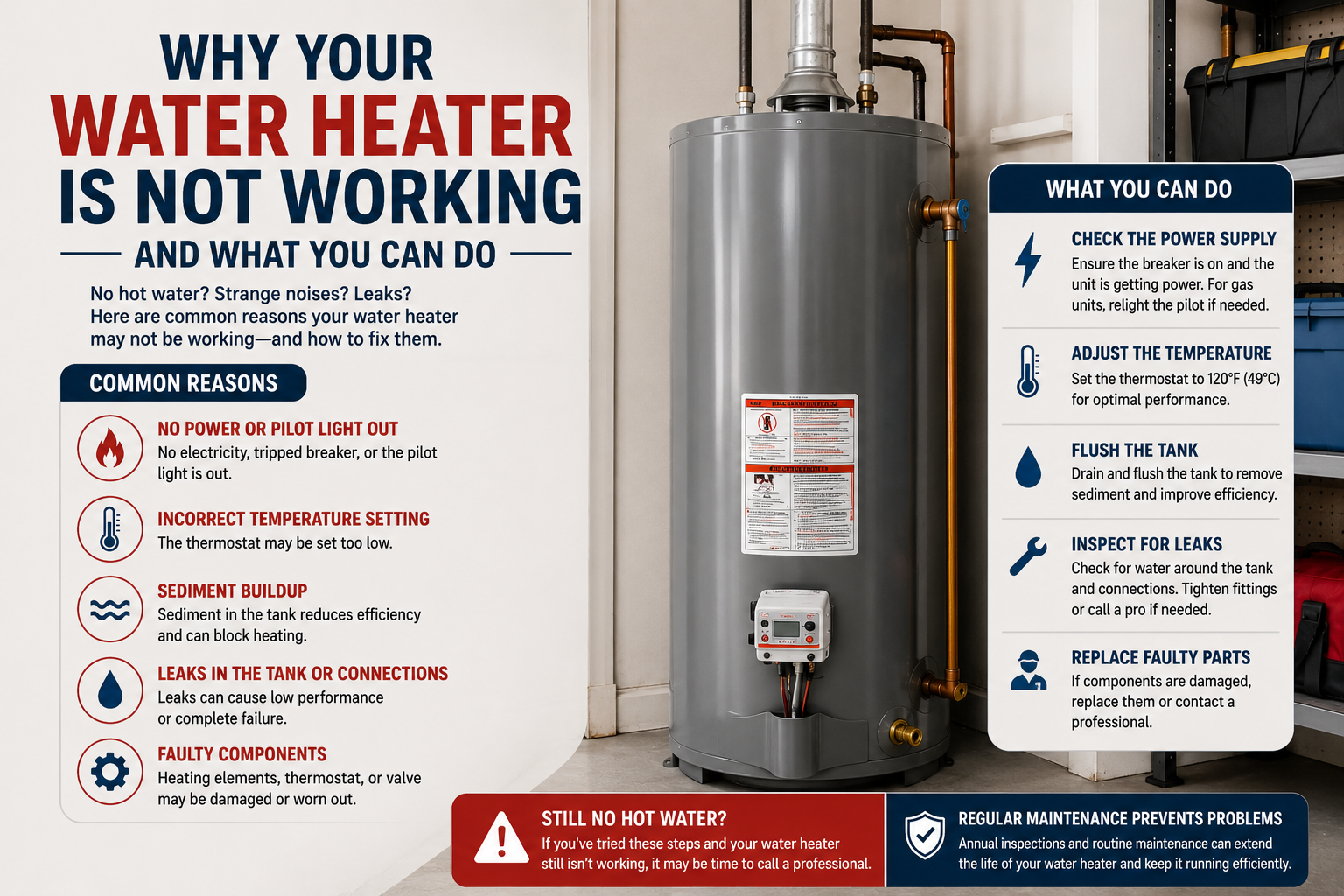
A water heater that suddenly stops working can disrupt your entire routine. Whether you wake up to cold water or notice your system gradually losing performance, the issue usually has an underlying cause that can be identified and fixed.
In homes across Forest Hills and nearby areas, water heater problems are often linked to aging systems, sediment buildup, or component failure. Some issues can be resolved with simple troubleshooting, while others require professional repair.
This guide explains why your water heater may not be working, what signs to look for, and when it’s time to take action.
Start With the Basics Before Assuming the Worst
Before jumping to conclusions, it’s worth checking a few simple things that can cause your water heater to stop working.
- Is the power supply turned on for electric systems
- Has the circuit breaker tripped
- Is the gas supply active for gas systems
- Is the thermostat set correctly
Sometimes the issue is not a failure but a small disruption in power or settings. If everything appears normal and the system is still not working, the problem is likely internal.
No Hot Water at All
When there is no hot water, the problem is usually related to a core component of the system.
Possible causes:
- Failed heating element (electric systems)
- Pilot light issues (gas systems)
- Thermostat malfunction
- Power or gas supply failure
In these cases, the system is unable to heat water entirely. This is one of the most common problems homeowners face.
Water Is Not Heating Properly
Sometimes the water heater is working, but the temperature is inconsistent or not hot enough.
Common reasons:
- Sediment buildup inside the tank
- Faulty thermostat settings
- Partial heating element failure
- Overloaded system demand
This type of issue often develops gradually and gets worse over time if not addressed.
Water Heater Is Leaking
A leaking water heater is a serious issue that should not be ignored.
Types of leaks:
- Loose connections or valves
- Pressure relief valve discharge
- Internal tank corrosion
Leaks from fittings can often be repaired, but leaks from the tank itself usually mean the system needs replacement.
Strange Noises Coming From the Unit
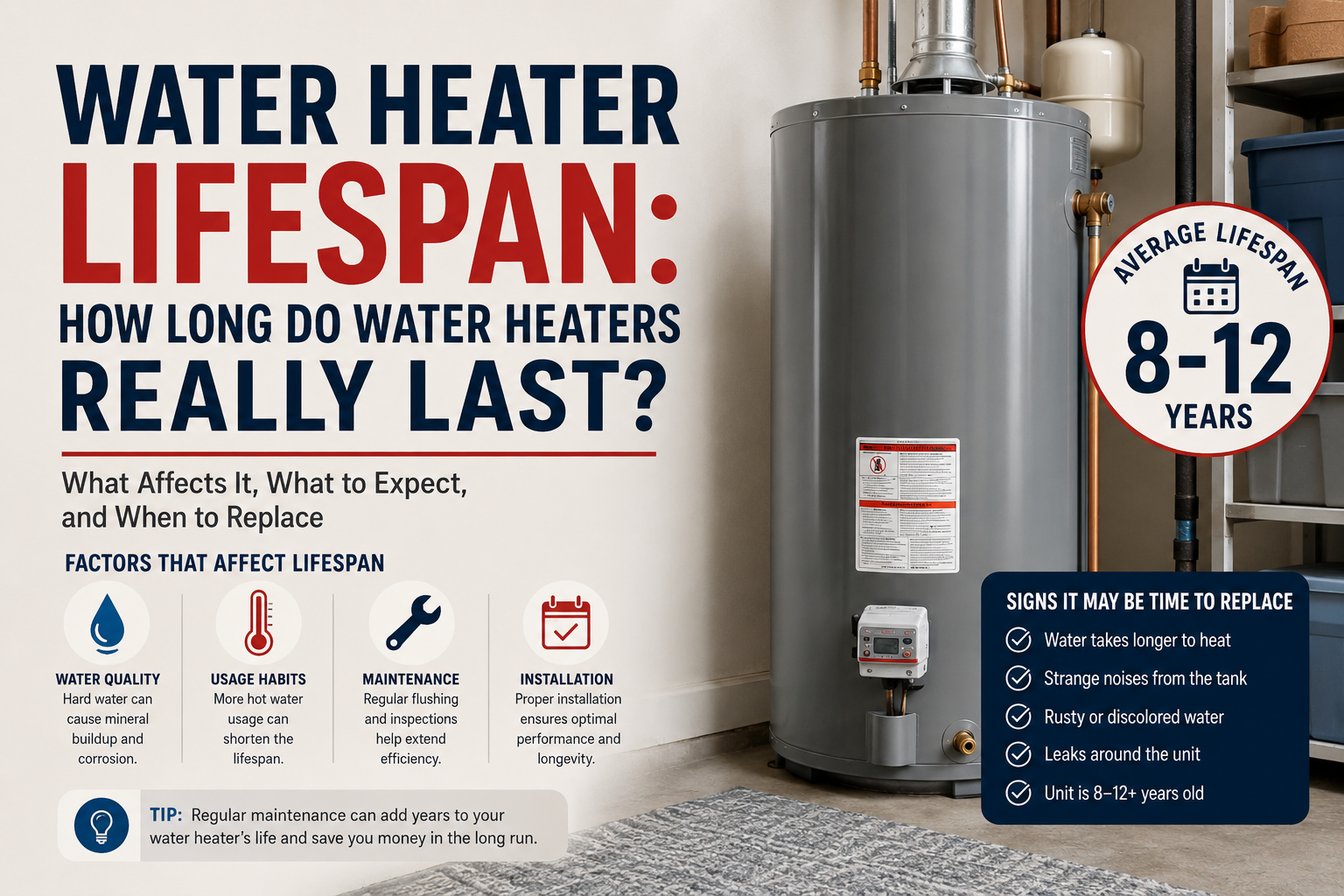
If your water heater is making unusual sounds like popping or rumbling, it’s often a sign of internal buildup.
Why this happens:
- Sediment collects at the bottom of the tank
- Heat causes trapped water to create noise
- Over time, this reduces efficiency and damages the system
This is very common in areas with mineral-rich water and usually requires flushing or maintenance.
Rusty or Discolored Water
Water coming out brown or rusty can indicate internal corrosion.
Possible causes:
- Corrosion inside the tank
- Failing anode rod
- Rust in plumbing lines
If the tank itself is corroded, replacement is often the only long-term solution.
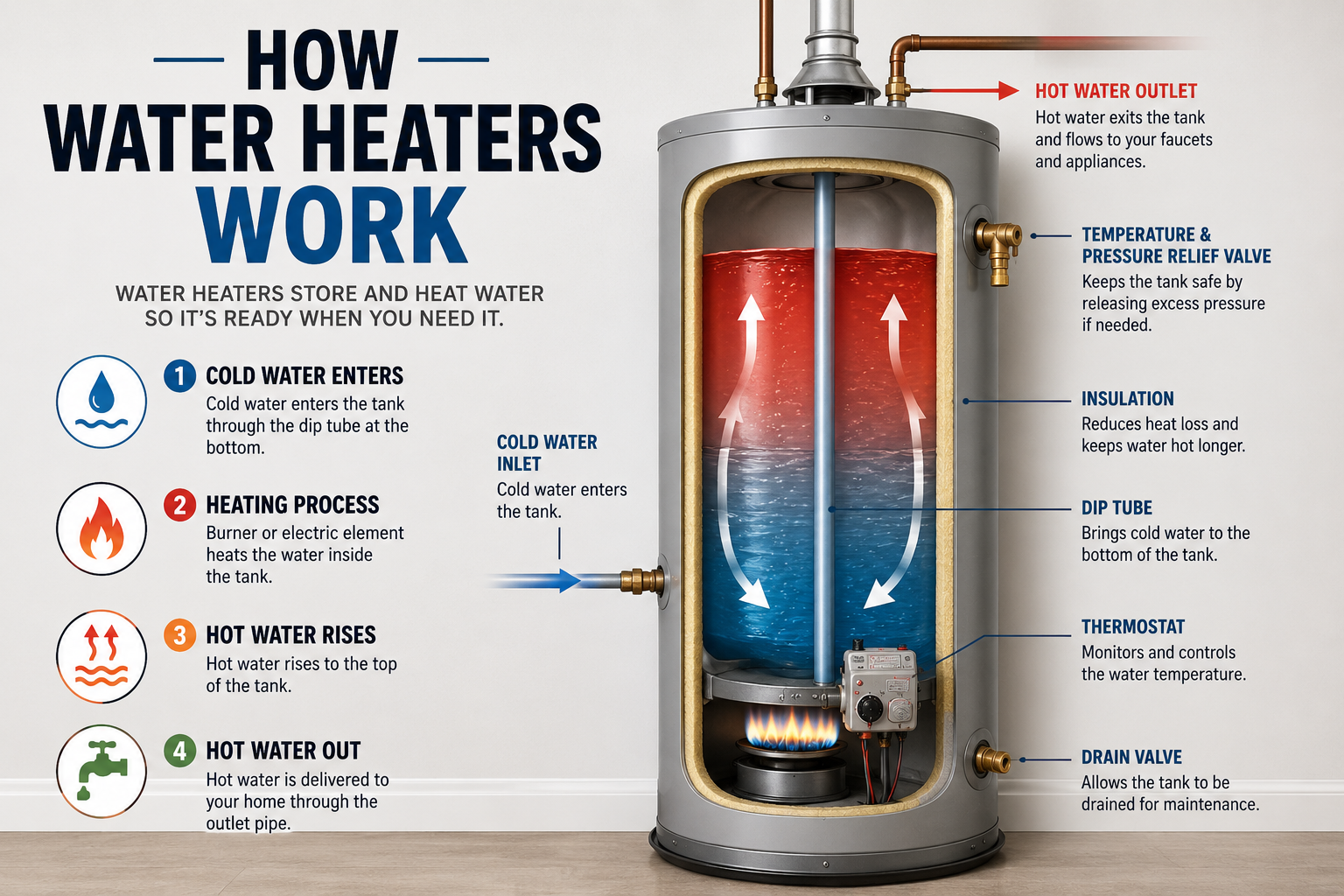
Tank vs Tankless System Issues
Different systems fail in different ways.
Tank systems:
- Sediment buildup
- Tank corrosion
- Heating element or burner failure
Tankless systems:
- Flow rate issues
- Mineral buildup in heat exchanger
- Error codes and sensor faults
If you’re unsure which system you have or what’s wrong, it’s best to have it inspected.
When You Can Fix It Yourself
Some minor issues can be handled without professional help.
You may be able to fix it yourself if:
- The breaker has tripped
- The thermostat needs adjustment
- The pilot light simply needs relighting
However, anything involving internal components, leaks, or electrical issues should be handled professionally.
When You Should Call a Professional
You should not delay calling for help if:
- There is no hot water at all
- The system is leaking
- You hear loud or unusual noises
- The unit is repeatedly failing
- You suspect electrical or gas issues
Professional repair ensures the issue is handled safely and correctly.
How to Prevent Water Heater Problems
Preventative maintenance plays a big role in avoiding breakdowns.
Key steps:
- Flush the tank regularly
- Inspect components annually
- Check pressure valves
- Monitor system performance
Routine servicing helps extend the life of your system and reduces unexpected failures.
Water Heater Issues in Forest Hills Homes
In Forest Hills, many homes have older water heater systems that are more prone to issues like sediment buildup and component wear.
Apartment setups and shared systems can also create additional strain on water heaters, making maintenance and timely repair even more important.
Final Thoughts
A water heater not working is rarely a random issue. Most problems develop over time and show warning signs before complete failure.
Understanding these signs and taking action early can help you avoid more serious damage and higher repair costs.
If you’re unsure about the condition of your system, having it inspected is always the safest option.