Most homeowners rely on hot water every day, but very few understand how their water heater actually works. Knowing the basics can help you spot problems early, make better decisions about repairs or upgrades, and maintain your system properly.
In homes across Forest Hills and nearby areas, water heaters come in different types, but they all follow the same basic principle: heating water and delivering it when needed.
This guide breaks down how water heaters work, the different system types, and what happens inside the unit when you turn on a hot water tap.
The Basic Principle Behind Water Heaters
At its core, a water heater does one simple job:
It heats water and stores or delivers it when you need it.
The process involves three main steps:
- Cold water enters the system
- The water is heated using gas or electricity
- Hot water is delivered to your taps when you turn them on
While this sounds simple, the way it happens depends on the type of system you have.
How Tank Water Heaters Work
Tank water heaters are the most common systems found in homes.
How the process works:
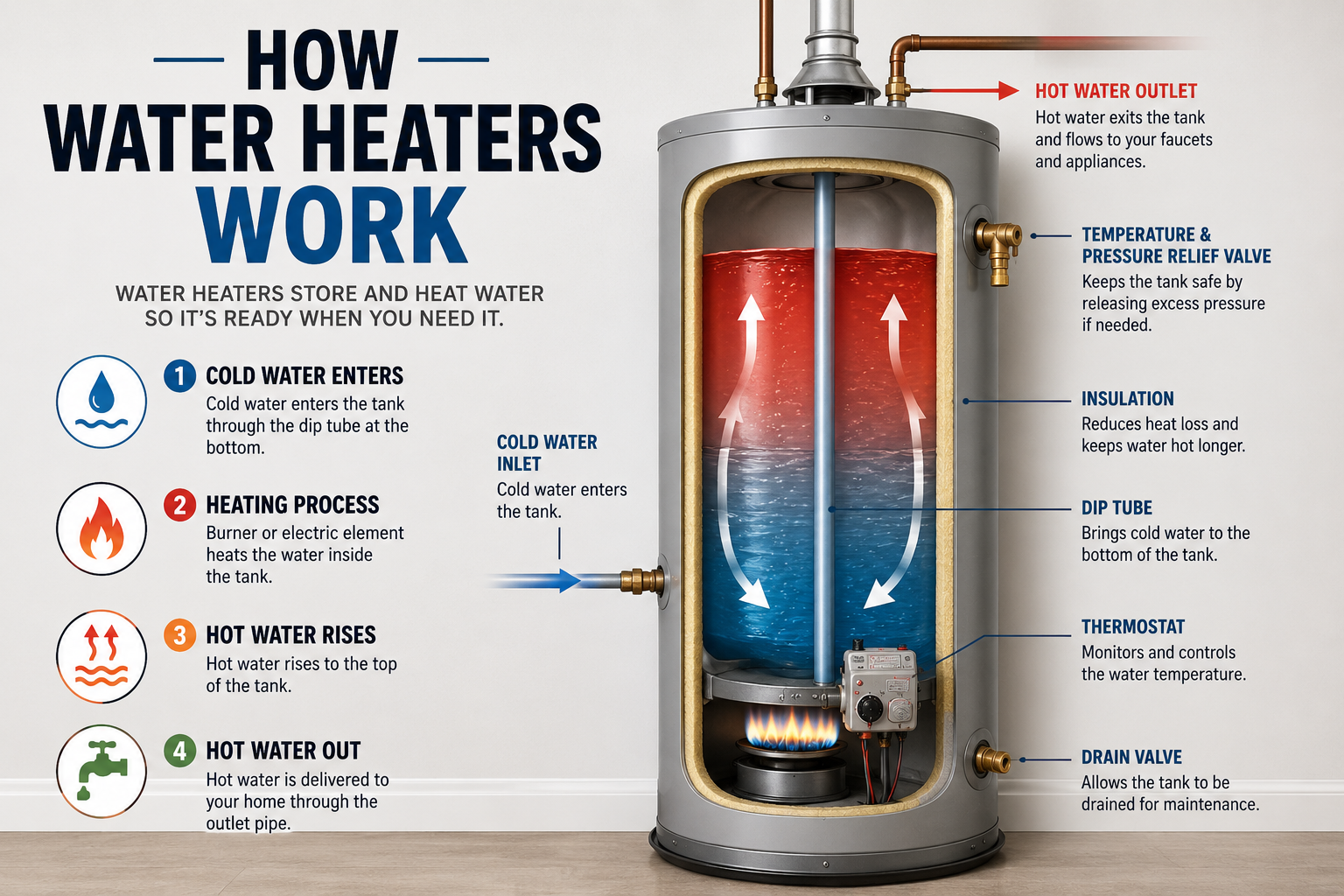
- Cold water enters the tank through a dip tube
- Heating elements (electric) or a burner (gas) heat the water
- Hot water rises to the top of the tank
- When you turn on a tap, hot water is pushed out
- The tank refills and reheats automatically
These systems store a fixed amount of hot water, which is why they can run out if demand is high.
Key Components of a Tank Water Heater
Main components include:
- Tank: Stores heated water
- Heating element or burner: Heats the water
- Thermostat: Controls temperature
- Dip tube: Brings cold water into the tank
- Anode rod: Prevents corrosion
- Pressure relief valve: Releases excess pressure
If any of these components fail, the system may stop working properly.
How Tankless Water Heaters Work
Tankless systems operate differently because they do not store water.
How the process works:
- Cold water enters the unit when you turn on a tap
- The system activates heating elements or a gas burner
- Water is heated instantly as it flows through the unit
- Hot water is delivered directly without storage
This allows for continuous hot water, as long as the system can handle the demand.
Key Components of a Tankless Water Heater
Tankless systems rely on more advanced components.
Main parts include:
- Heat exchanger: Heats water quickly
- Flow sensor: Detects water movement
- Control board: Manages system operation
- Burner or heating elements: Provide heat
- Venting system (gas units): Removes exhaust
Because of this complexity, tankless systems often require more precise diagnostics when issues occur.
Gas vs Electric Water Heaters
Water heaters can run on gas or electricity, and each uses a different heating method.
Gas systems:
- Use burners to heat water
- Heat water quickly
- Require proper ventilation
Electric systems:
- Use heating elements inside the tank
- Are simpler in design
- Often used in apartments and smaller homes
Both types are effective, but the choice depends on your home setup and usage.
What Happens When You Turn on a Hot Water Tap
This is where everything comes together.
When you turn on a hot water tap:
- Hot water leaves the system
- Cold water enters to replace it
- The system activates heating
- The cycle continues as long as water is being used
In tank systems, this process relies on stored water.
In tankless systems, it happens instantly.
Why Water Heaters Stop Working
Understanding how systems work makes it easier to understand why they fail.
Common reasons include:
- Component failure (heating element, thermostat)
- Sediment buildup reducing efficiency
- Corrosion inside the tank
- Electrical or gas supply issues
- Wear and tear over time
How Maintenance Helps Your Water Heater
Routine maintenance keeps your system working efficiently and prevents common issues.
Maintenance typically includes:
- Flushing the tank
- Checking components
- Inspecting for wear and leaks
- Ensuring proper operation
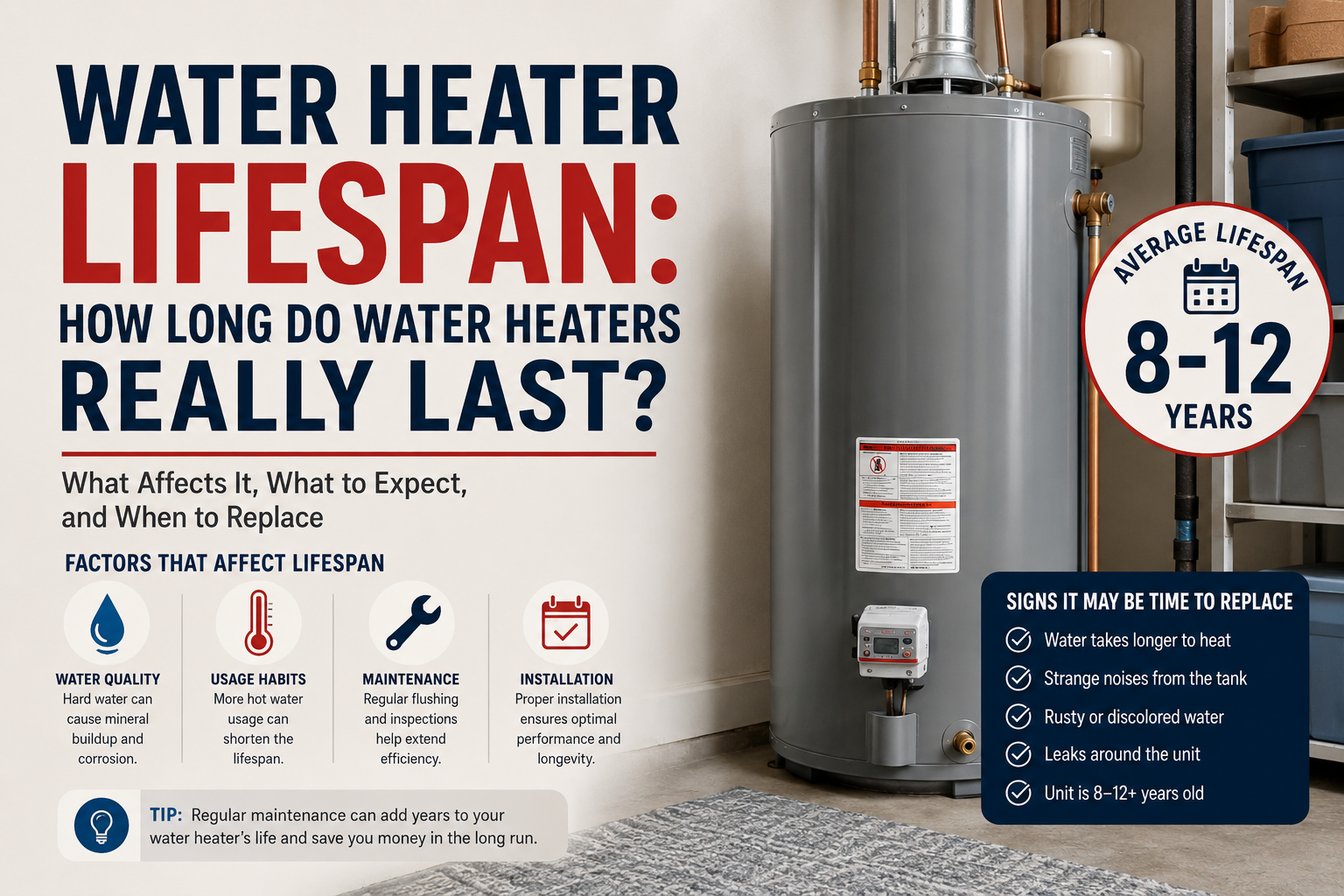
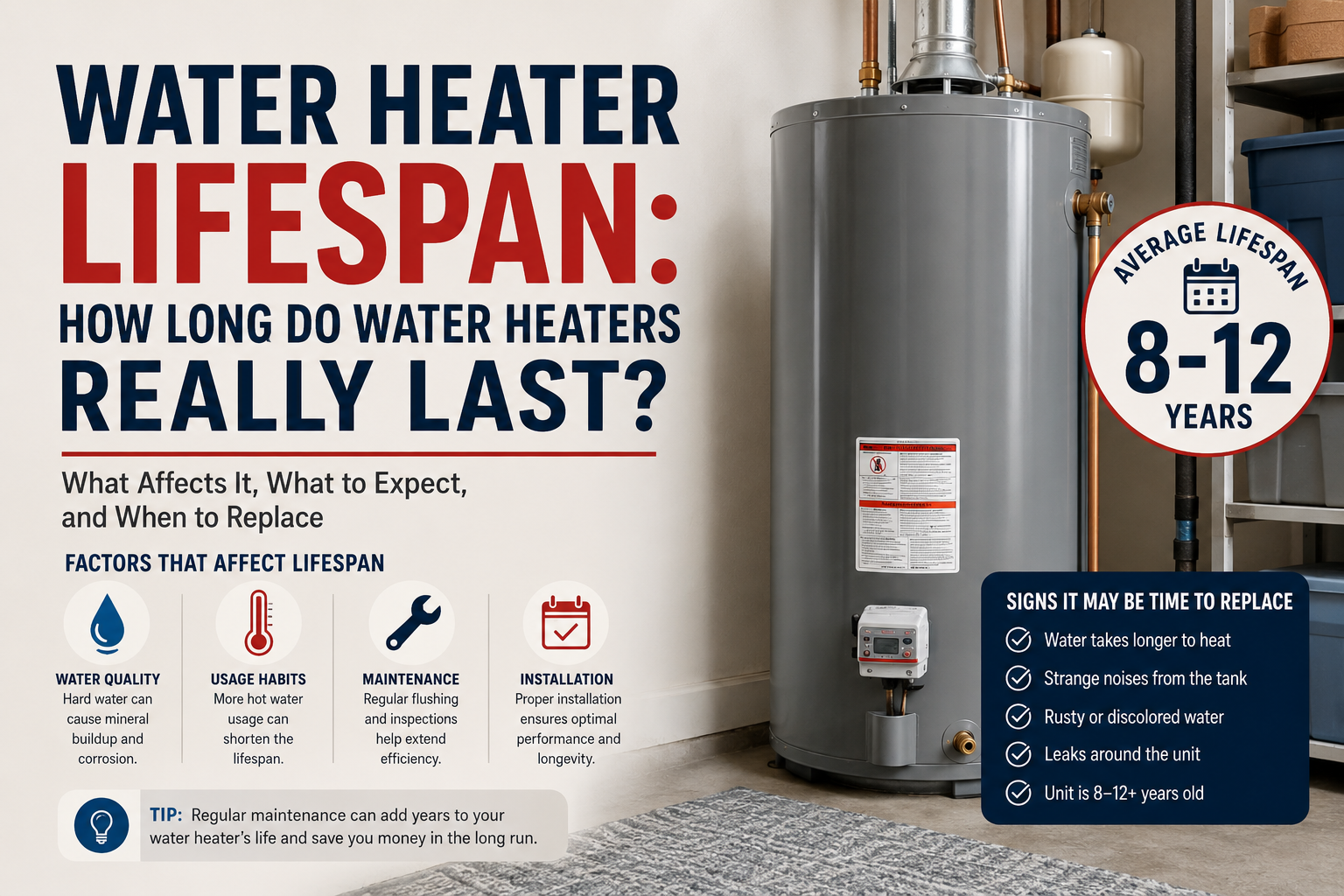
Regular servicing helps extend the life of your system.
Choosing the Right Type of Water Heater
Understanding how different systems work helps you choose the right one for your home.
Tank systems are better if:
- You want lower upfront cost
- Your usage is consistent
Tankless systems are better if:
- You want continuous hot water
- You value energy efficiency
Water Heater Systems in Forest Hills Homes
In Forest Hills, many homes still use traditional tank systems, especially in older buildings. However, tankless systems are becoming more common in newer properties and renovations.
Understanding your system helps you maintain it properly and identify issues early.
Final Thoughts
Water heaters may seem simple from the outside, but they rely on several components working together to deliver hot water consistently.
Understanding how your system works helps you:
- Spot problems early
- Make better repair decisions
- Extend the lifespan of your unit
If your system is not performing as expected, it’s best to have it checked before the issue becomes more serious.