Most homeowners don’t think about their water heater until something goes wrong. But understanding how long a water heater typically lasts can help you plan ahead, avoid unexpected breakdowns, and make better decisions about maintenance and replacement.
In homes across Forest Hills and nearby areas, water heater lifespan varies depending on the type of system, usage, and how well it’s maintained. While general estimates exist, real-world performance can differ significantly.
This guide explains how long water heaters last, what affects their lifespan, and how to tell when it’s time to replace your system.
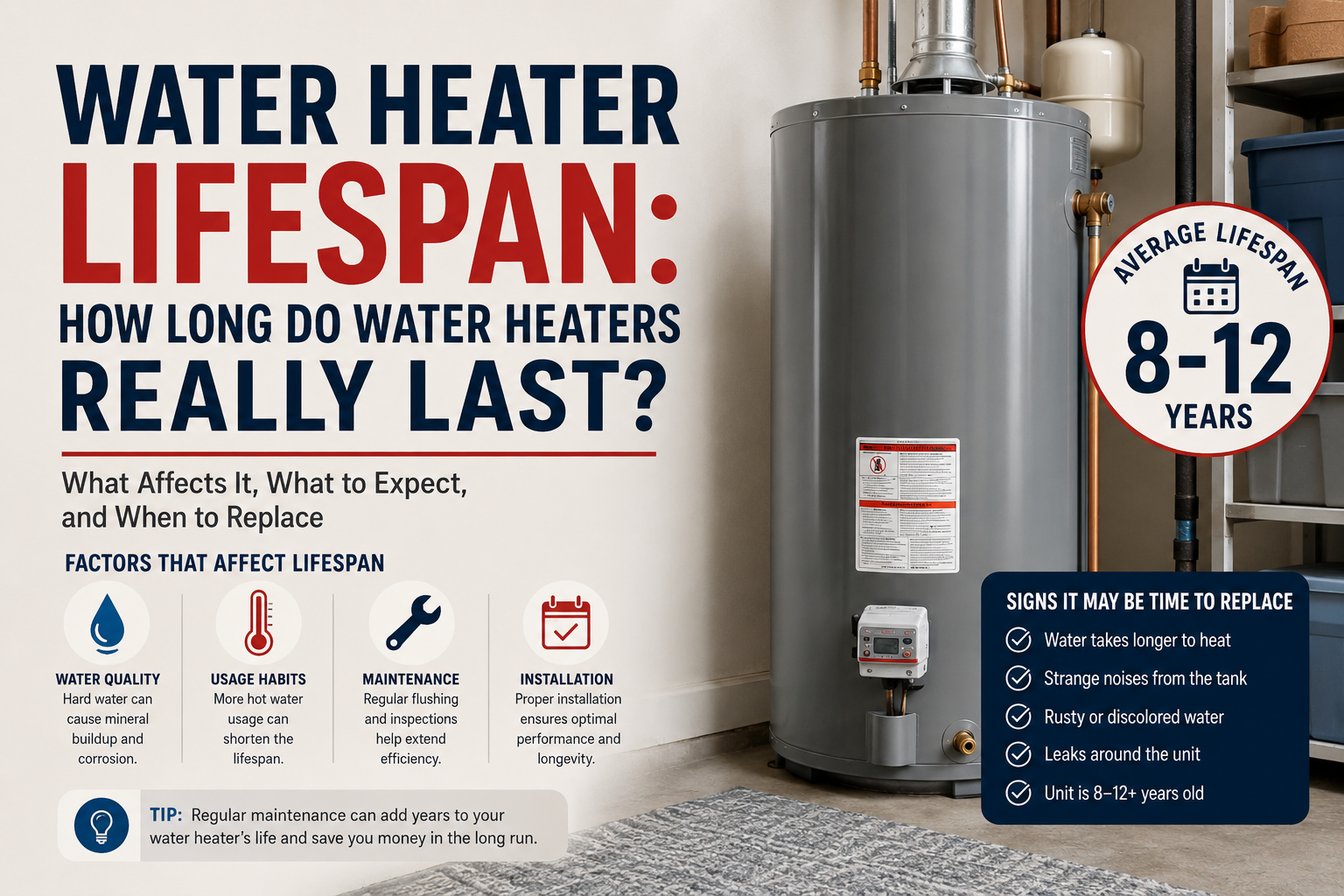
Average Lifespan of Different Water Heater Types
Not all water heaters last the same amount of time. The type of system you have plays a major role.
Tank Water Heaters
- Typical lifespan: 8 to 12 years
- More prone to wear due to constant water storage
Tankless Water Heaters
- Typical lifespan: 15 to 20 years
- Longer life due to on-demand operation
Tankless systems generally last longer, but they still require proper maintenance to reach their full lifespan.
What Affects Water Heater Lifespan
Several factors determine how long your water heater will last.
Water Quality
Mineral-rich water can cause sediment buildup, which reduces efficiency and damages internal components over time.
Usage Levels
Higher usage means more strain on the system, leading to faster wear.
Maintenance Frequency
Regular maintenance helps prevent buildup, corrosion, and component failure.
Installation Quality
Improper installation can lead to early performance issues and reduced lifespan.
System Type and Build Quality
Higher-quality systems often last longer, especially when properly maintained.
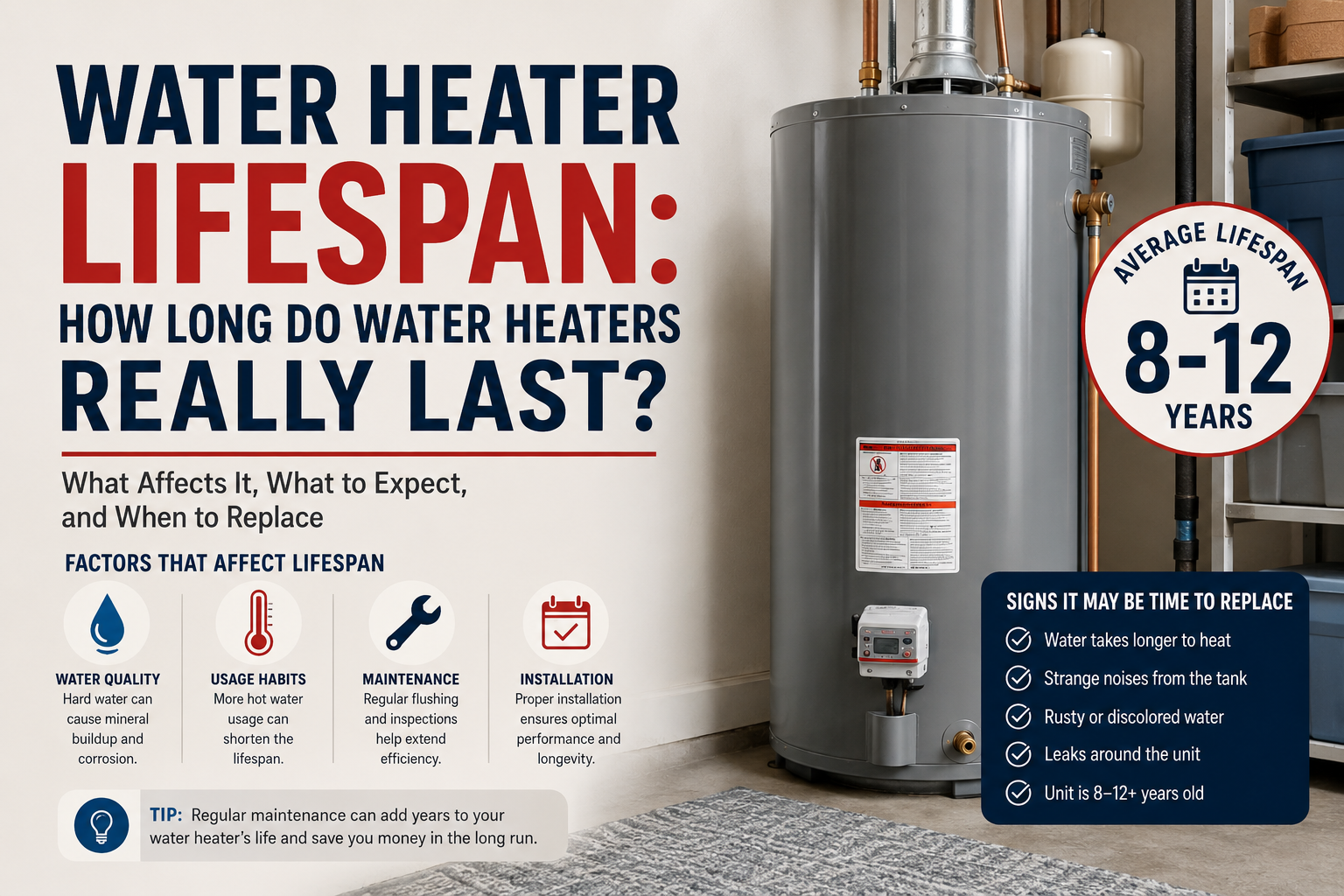
H2: Signs Your Water Heater Is Nearing the End of Its Life
Water heaters rarely fail without warning. Most systems show signs before complete breakdown.
Common signs include:
- Inconsistent or reduced hot water
- Strange noises from the unit
- Rust-colored or discolored water
- Frequent repairs
- Water heater leaking
- Rising energy bills
If you notice multiple signs at once, your system may be reaching the end of its lifespan.
When to Repair vs Replace
One of the biggest decisions homeowners face is whether to repair or replace their water heater.
Repair is usually the better option if:
- The system is relatively new
- The issue is minor and isolated
- Repair costs are low
Replacement is often the better choice if:
- The system is over 10 years old
- Repairs are becoming frequent
- Efficiency has significantly decreased
- The tank is leaking
How to Extend the Life of Your Water Heater
Proper maintenance can significantly increase the lifespan of your system.
Key steps include:
- Flushing the tank regularly to remove sediment
- Checking the anode rod for corrosion
- Inspecting valves and connections
- Monitoring system performance
Routine servicing helps prevent damage and keeps the system running efficiently.
Why Tank Water Heaters Wear Out Faster
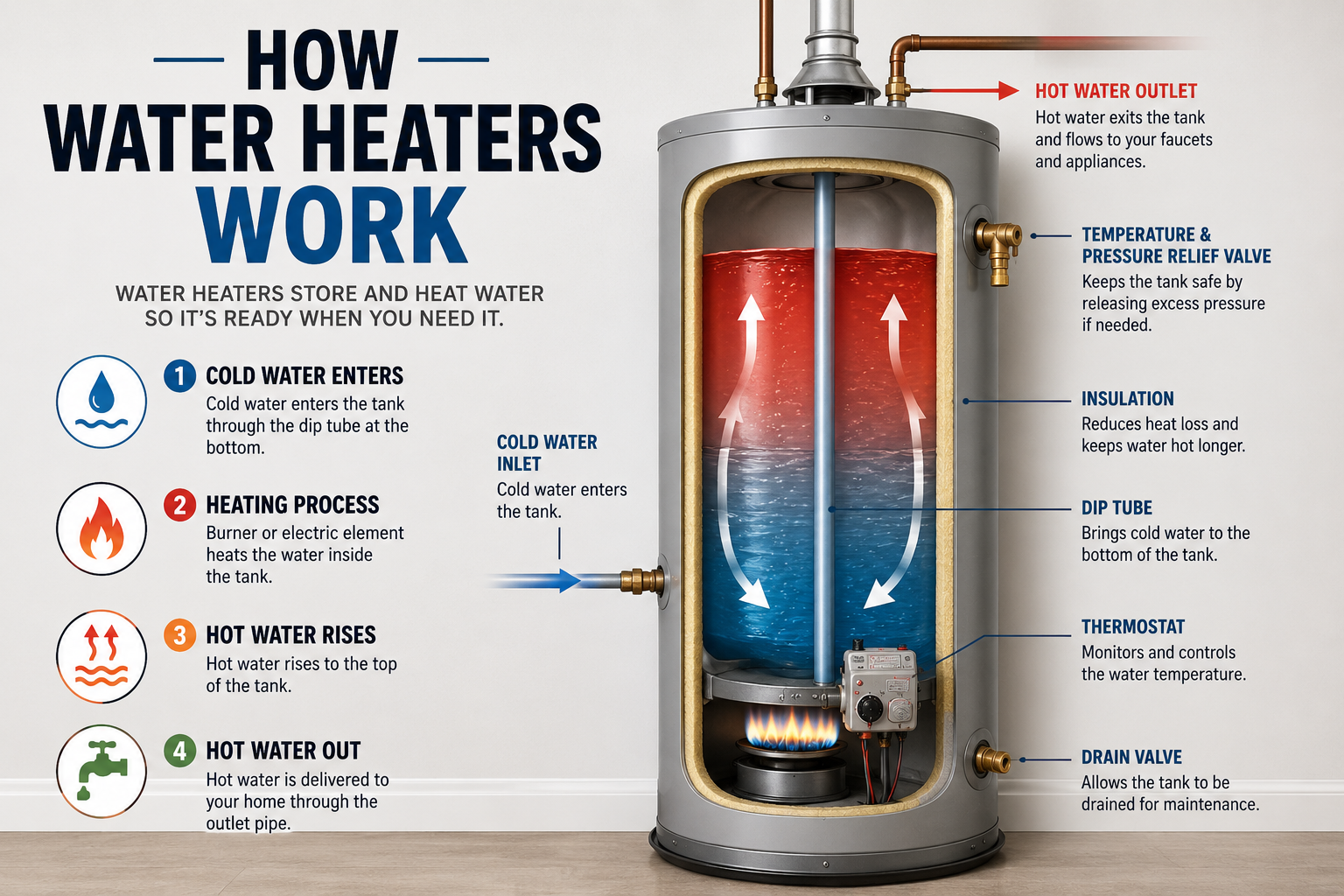
Tank systems store water constantly, which exposes them to more wear over time.
Key reasons:
- Continuous heating cycles
- Sediment buildup at the bottom of the tank
- Internal corrosion
- Pressure changes inside the tank
These factors contribute to a shorter lifespan compared to tankless systems.
Why Tankless Systems Last Longer
Tankless systems do not store water, which reduces internal stress.
Advantages include:
- Less exposure to corrosion
- Reduced sediment accumulation
- More efficient operation
However, they still require maintenance to prevent scaling and performance issues.
Can a Water Heater Last Longer Than Expected
Yes, some systems last longer than average if they are well maintained and used under moderate conditions.
However, even if a system is still working, older units often become less efficient and more prone to sudden failure.
Planning for replacement before complete breakdown can help avoid inconvenience and damage.
Water Heater Lifespan in Forest Hills Homes
In Forest Hills, many homes still use older tank systems that are more likely to reach the end of their lifespan sooner. Sediment buildup and aging components are common issues in these systems.
Apartment setups and higher usage can also contribute to faster wear.
Final Thoughts
Water heater lifespan depends on several factors, but most systems will eventually need replacement as they age.
Understanding the signs of wear and maintaining your system properly can help you avoid unexpected failures and make better long-term decisions.
If your water heater is nearing the end of its life, it’s better to plan ahead rather than wait for a complete breakdown.